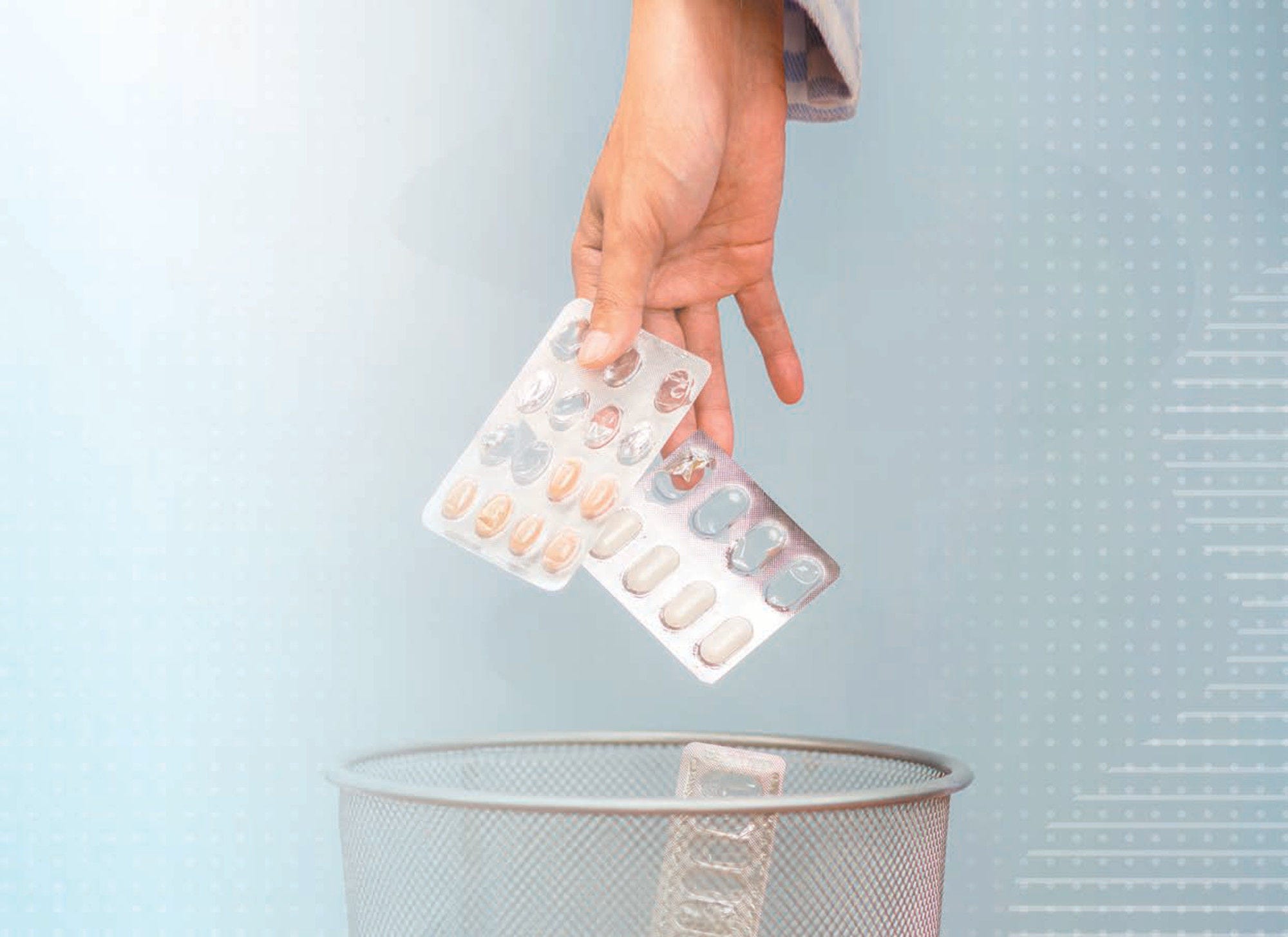
Our recently published OECD report, “Management of Pharmaceutical Household Waste” provides three key recommendations to limit environmental impacts from unused or expired medicine.
1. Avoid medicine waste when possible
Shorter prescription cycles and prescribing smaller amounts, as well as adjusting packaging sizes help to minimise the amount medicines left over after recovery or in case of therapy changes. For instance, France recently passed a law to allow community pharmacies to hand out prescription medicine, including antibiotics, per individual units.
Redistribution could also help to avoid some medicine wastage. While these initiatives are still relatively niche and face hurdles regarding quality assurance and counterfeits, some initiatives exist. In the Netherlands, Pharmaswap provides a platform for pharmacies to trade unopened, close-to-expiry stocks of medicine.
2. Improve collection and treatment of unavoidable waste
Fully eliminating medicine waste is unrealistic. Some patients may recover more rapidly than foreseen, change their treatment or not adhere to prescribed treatments. Ensuring proper collection and disposal of this unavoidable medicine waste is thus important.
Various countries have separate collection systems in place, which can prevent leakage into the environment via sewage waters or landfills and to avoid misuse. In particular, take-back schemes organised as part of an extended producer responsibility (EPR) approach have shown to be effective, while also implementing the polluter pays principle (e.g. in France, Sweden, Portugal or Spain). Ideally, drug take-back should be made available to consumers all year-round at convenient collection points, and free of charge to minimise transaction costs compared to other disposal routes.
3. Raise awareness
Awareness among the public about proper disposal routes remains limited in many countries. In the Netherlands, 17.5% were unaware that liquid medicines should not be flushed and 35% of Canadians did not know about proper disposal of unwanted medication. In a US survey, 45% of the respondents did not recall receiving information on proper disposal practices.
Well-focused communication campaigns are thus essential. Several EPR schemes require a share of the scheme’s budget to be spent on communication and outreach. In addition, doctors and pharmacists play a key role in informing the public about the appropriate disposal of their unused medicines. Information leaflets handed out with products is one way to inform patients and consumers